Basic Elements of Static Relay

Basic Elements of Static Relay: The basic elements of a static relay are namely, Input Element: Mixing circuits are needed to sum the input signals in a convenient form. Semiconductor…

Continue Reading Basic Elements of Static Relay

Square Wave Generators

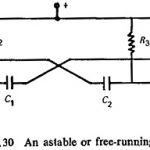
Square Wave Generators: Diode clippers can be used to remove the curved portion of the sinusoidal wave to give square waves. The operational amplifier together with an integrator, can be…

Continue Reading Square Wave Generators

Smoothing Circuits

Smoothing Circuits: The rectified a.c. consists of a series of undirectional half waves of current or voltage. It is generally desirable to smooth this output. The various filters used for…

Continue Reading Smoothing Circuits

Logic Circuit in Static Relay

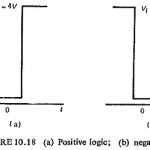
Logic Circuit in Static Relay: The concept of Logic Circuit in Static Relay can be better understood by considering the logic operations performed by the devices rather than the actual…

Continue Reading Logic Circuit in Static Relay

Thyristor in Static Relay

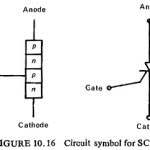
Thyristor in Static Relay: The structure of Thyristor in Static Relay consists of four alternate p-and n-type layers. In the thyristor (also called a silicon controlled rectifier—SCR) connections are made…

Continue Reading Thyristor in Static Relay

Unijunction Transistor in Static Relay

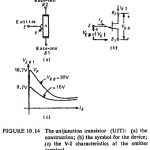
Unijunction Transistor in Static Relay: Unijunction Transistor in Static Relay is a three terminal device with only one pn-junction. It is made up of n-type silicon wafer having two base…

Continue Reading Unijunction Transistor in Static Relay

Field Effect Transistor in Static Relay

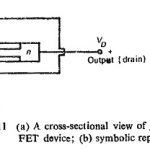
Field Effect Transistor in Static Relay: Field Effect Transistor in Static Relay is a unipolar device as compared to bipolar transistor already discussed. It consists of a bar of semiconductor…

Continue Reading Field Effect Transistor in Static Relay