Transistor Use in Static Relay
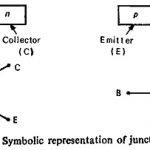
Transistor Use in Static Relay: Transistor Use in Static Relay - In its simplest form, it consists of two pn junction diodes coupled together by a very thin common base,…
Semiconductor Diodes in Static Relays: Semiconductor Diodes in Static Relays - The pn junction has rectifying characteristics as shown in Fig. (10.1). If a source of emf is connected to…
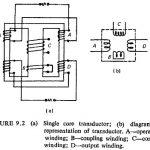
Transductor Relay (Magnetic Amplifier Relay): Transductor Relay - Since relays now have to perform much more complicated functions, many types tend to become very complex mechanically, and hence costly, to…
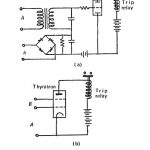
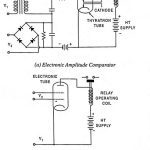
Electronic Relays: Electronic Relays - These were the first to be developed in the series of static relays. They date back to early 1928 when Fitzgerald presented a carrier current…
Static Relays Basics and Classification: A Static Relays Basics refers to a relay in which the measurement or comparison of electrical quantities is done in a static network which is…
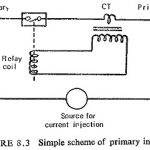
General Methods of Testing Protective Gear: The General Methods of Testing Protective Gear are namely, Primary Injection, Secondary Injection, Measurement of Time, Primary Injection: These tests are limited by the…
Heavy Current Test Plant: Heavy Current Test Plant - Simulating the exact fault conditions as would occur in practice is a difficult and a tedious job. The plant for providing…
Testing of Overcurrent Relay: Test benches are used for proving the design characteristics of relays. These are provided with accurate timing apparatus and calibrated current and voltage supplies. The basic…