Classification of Relay Testing
Classification of Relay Testing: Classification of Relay Testing are usually conducted to demonstrate that: the relay will operate correctly to clear a fault; and the relay will remain inoperative on…
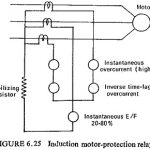
Motor Protection: Motor Protection - There is a wide range of motors in existence for various purposes. However, the fundamental problems affecting the choice of protection are independent of the…
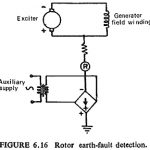
Rotor Protection: Rotor Protection - As pointed earlier rotor windings may be damaged by earth faults or open circuits. Figure (6.16) shows a modern method of rotor earth-fault detection. The…
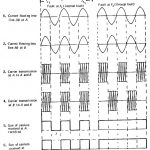
Phase Comparison Carrier Protection: The phase comparison pilot-relaying operates on the principle of comparing the phase position of the currents at the two ends of the protected section. The Phase…
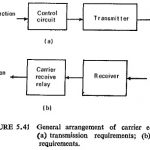
Carrier Pilot Protection and Microwave Pilot Protection: The problem of providing economically an auxiliary channel by means of pilots for long lines directed attention to carrier techniques. In this case…
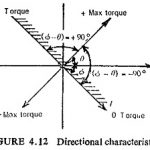
Single Phase Directional Relay: Single Phase Directional Relay - The general Eq. (4.8) suggests that for directional control the individual torques, viz. K |A|2 and K′ |B|2 should be eliminated. Considering a…
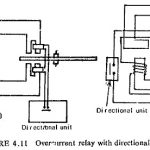
Directional Relays: Selective protection cannot be achieved with time graded overcurrent protection systems in ring or loop systems as well as in radial circuits with two end power supply. A…
Instantaneous Overcurrent Relays: If the relay operates instantly without any intentional time delay, this characteristic can generally be satisfied by a relay of the non-polarized attracted armature type. This relay…