Transformer Coupled Transistor Amplifier – Working Principle
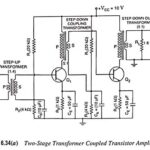
Transformer Coupled Transistor Amplifier - Working Principle: The main cause for low voltage and power gains of an R-C coupled amplifier is that the effective load (Rac) of each stage…
What is Multistage Amplifier? - Types, Block Diagram and Analysis Amplifiers that produce voltage, current, and/or power gain through the use of two or more stages are called multistage amplifiers.…
Explain Distortion in Amplifier? | Types of Amplifier Distortion: Under ideal conditions, amplified output signal must have exactly the same waveform as the input signal. But in practical amplifiers, this…
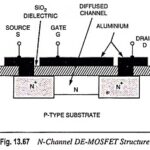
Depletion Type MOSFET - Construction, Operation and Characteristics: As we know already that when the gate is biased negative w.r.t. the source in an N-channel JFET, the depletion-region widths are…
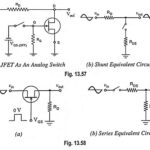
Applications of FETs (Field Effect Transistors): Applications of FETs - FET has a very high input impedance (100 MΩ in case of JFETs and 104 to 109 MΩ in case of…
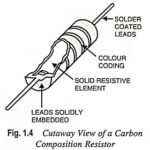
What is Resistor in Electronics? What is Resistor in Electronics? - Resistance is a dissipative element, which converts electrical energy into heat, when the current flows through it in any…
Bus Interface in Microprocessor: Bus Interface in Microprocessor - A microcomputer consists of a set of components such as CPU, memory, I/O device and these components communicate with each other…
Bridge Tied Load Amplifier: All of the power amplifiers already discussed have been single-ended (SE): meaning that they provide power to a load that has one terminal grounded and the…