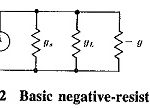
Negative Resistance Amplifier

Negative Resistance Amplifier: The classical application of the tunnel diode was in microwave oscillators, especially after it was realized that the secret of stable oscillations lay in loosely coupling the…

Continue Reading Negative Resistance Amplifier
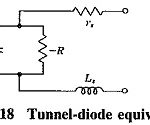
Tunnel Diode Equivalent Circuit

Tunnel Diode Equivalent Circuit: The Tunnel Diode Equivalent Circuit, when biased in the negative-resistance region, is shown in Figure 12-18. At all except the highest frequencies, the series resistance and…

Continue Reading Tunnel Diode Equivalent Circuit

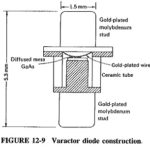
Varactor Diode Operation and Characteristics

Varactor Diode Operation and Characteristics: Varactor Diode Operation and Characteristics were first used in the early 1950s as simple voltage-variable capacitance and later for frequency modulation of oscillators. They thus…

Continue Reading Varactor Diode Operation and Characteristics

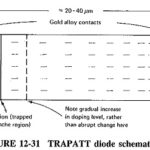
Trapatt Diode Construction and Working

Trapatt Diode Construction and Working: The Trapatt Diode Construction and Working is derived from and closely related to the IMPATT diode. Indeed, as pointed out near the beginning of this…

Continue Reading Trapatt Diode Construction and Working

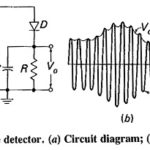
Simple Diode Detector

Simple Diode Detector: Operation of diode detector: The Simple Diode Detector is by far the most common device used for AM demodulation (or detection), and its operation will now be…

Continue Reading Simple Diode Detector

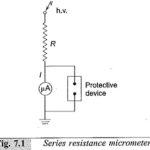
Series Resistance Microammeter

Series Resistance Microammeter: High d.c. voltages are usually measured by connecting a very high resistance (few hundreds of megaohms) in Series Resistance Microammeter as shown in Fig. 7.1. Only the…

Continue Reading Series Resistance Microammeter

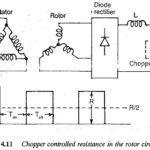
Chopper Resistance in the Rotor Circuit

Chopper Resistance in the Rotor Circuit: Speed control by means of slip variation can be achieved by employing a variable resistance Chopper Resistance in the Rotor Circuit. From the equations…

Continue Reading Chopper Resistance in the Rotor Circuit