
Circuit Model of DC Machine
Circuit Model of DC Machine: The parallel paths of DC machine armature are symmetrical and each has an induced emf Ea and a resistance Rp. The armature can be represented…
Continue Reading
Circuit Model of DC Machine
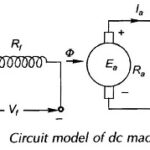
Circuit Model of DC Machine: The parallel paths of DC machine armature are symmetrical and each has an induced emf Ea and a resistance Rp. The armature can be represented…
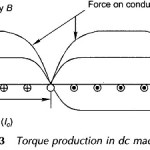
EMF and Torque Equation of DC Machine: EMF and Torque Equation of DC Machine - It was shown in Sec. 5.2 (Fig. 5.14 (a)) that in a dc machine the…
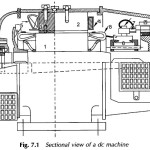
Introduction of DC Motor: Introduction of DC Motor is constructed in many forms and for a variety of purposes, from the 3-mm stepper drawing a few μA at 1.5 V…
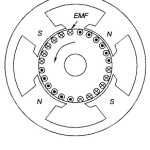
Construction and Working Principle of DC Motor: Construction and Working Principle of DC Motor is a heteropolar structure with stationary poles and the rotating armature (Fig. 5.8). DC Machine Basic…
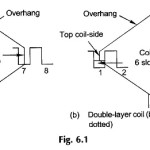
Types of Armature Winding in Electric Machine: We Know that field and Armature Winding Machine are the essential features of electric machines. The field windings are simple arrangements with concentrated…
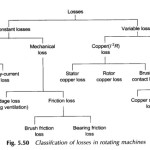
DC Motor Losses and Efficiency: The Losses and Efficiency of a transformer have been studied in earlier lesson. As in the case of transformers, it is more accurate to determine…
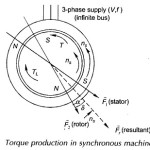
Torque Equation of Synchronous Motor: Figure 5.36 shows a Torque Equation of Synchronous Motor with a round rotor. The rotor is initially stationary with fixed north-south poles created by dc…
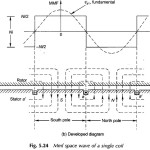
MMF of AC Distributed Winding: It has been seen earlier that the armature what-when-how.comof a practical machine has distributed winding wound for the same number of poles as the field…