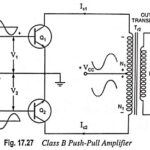
Class B Push Pull Amplifier – Circuit Diagram, Operation and Derivation
Class B Push Pull Amplifier - Circuit Diagram, Operation and Derivation: The circuitry for the Class B Push Pull Amplifier operation is the same as that for the class A…
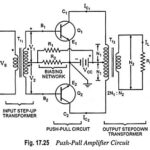
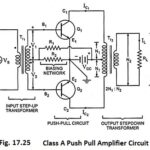
Class A Push Pull Amplifier - Working Principle, Advantages & Disadvantages: A Class A Push Pull Amplifier circuit is shown in Fig. 17.25. By Class A Push Pull Amplifier means…
Push Pull Amplifier - Circuit Diagram and its Workings: As we know already that, double-ended or push pull amplifiers makes use of two identical transistors in a single stage. It consists of…
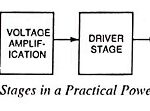
Various Stages in a Practical Power Amplifier and Block Diagram: Power amplifier is meant to amplify a weak signal until sufficient power is available to operate an output device such…
Classification of Power Amplifiers: Classification of Power Amplifiers are primarily divided into two categories viz. audio power amplifiers and radio power amplifiers. Audio power amplifiers, also called the small signal…
Difference between Voltage Amplifier and Power Amplifier: The Difference between Voltage Amplifier and Power Amplifier are discussed below The primary function of the voltage amplifier is to raise the voltage…
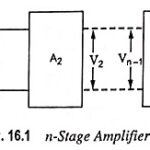
What is Multistage Amplifier? - Types, Block Diagram and Analysis Amplifiers that produce voltage, current, and/or power gain through the use of two or more stages are called multistage amplifiers.…
Classification of Amplifiers: In the Classification of Amplifiers, the transistor amplifiers may be classified in several ways such as on the basis of transistor configuration used, active device used, output,…