Transfer Function of Armature Controlled DC Motor
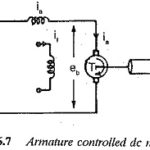
Transfer Function of Armature Controlled DC Motor: The speed of a dc motor can be controlled by varying the voltage applied to the armature of a dc motor. A separately…
Features of Electric Drive System: Before applying advantageously the control principles to electric drive systems to adjust or improve their behaviour as a special case of control problem, it is…
Introduction Control Techniques in Electric Drives: An electric drive is a well established industrial drive as it has several adÂvantages and special features. Its Control Techniques consists in starting, speed…
Reversible Drive using Field Reversal: A Reversible Drive using Field Reversal can be realised as shown in Figs. 4.83 and 4.84. In Fig. 4.83, the armature is fed from a…
Methods to Leading Power Factor: We have seen that a phase controlled converter requires reactive power for control and commutation. The harmonics do not contribute to the active power loading…
Single Phase DC Series Motor Drives: In the Single Phase DC Series Motor Drives the field is connected in series with the armature. The field current is the same as…
Single Phase Separately Excited DC Motor Drives: The circuit arrangement of a Single Phase Separately Excited DC Motor Drives Drives fed from a single phase controlled converter is shown in…
Commutation in DC Motor: Commutation and commutator wear and tear of the dc motor must be given due consideration when the motor operates on solid state converters. Spark-less commutation must…