Traction Drive Rating and Energy Consumption
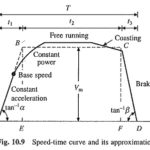
Traction Drive Rating and Energy Consumption: Traction Drive Rating and Energy Consumption - The speed-time curve of Fig. I0.6(a) is reproduced in Fig. 10.9. For simplification in calculations, it is…
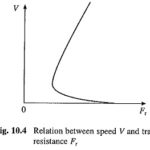
Nature of Traction Load: Nature of Traction Load describes as when the train runs at a constant velocity on level track, a number of frictional forces oppose its motion. The…
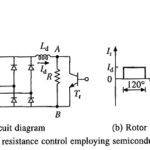
Rotor Resistance Control of Induction Motor: Speed-torque curves for Rotor Resistance Control of Induction Motor are given in Fig. 6.50. While maximum torque is independent of rotor resistance, speed at…
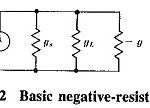
Negative Resistance Amplifier: The classical application of the tunnel diode was in microwave oscillators, especially after it was realized that the secret of stable oscillations lay in loosely coupling the…
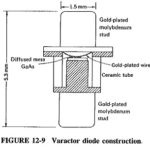
Varactor Diode Operation and Characteristics: Varactor Diode Operation and Characteristics were first used in the early 1950s as simple voltage-variable capacitance and later for frequency modulation of oscillators. They thus…
Antenna Characteristics: The following Antenna Characteristics isolated from surfaces which will alter or change their radiation patterns and efficiency. Current and Voltage Distribution: When an RF signal voltage is applied…
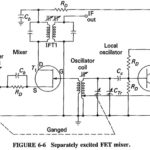
Frequency Changing and Tracking in Receivers: The mixer is a nonlinear device having two sets of input terminals and one set of output terminals. The signal from the antenna or…
Stepper Motor Interface: A stepper motor is a digital motor. It can be driven by digital signal. Fig. 15.18 shows the typical 2 phase Stepper Motor Interface using 8255. Motor…