Skip to content
  • Electrical and Electronics Interview Questions and Answers
    • Electronics Engineering Interview Questions and Answers
    • Electrical Power Engineering Interview Questions and Answers
    • Communication Engineering Interview Questions and Answers
    • Digital Signal Processing Interview Questions and Answers
    • High Voltage Engineering Interview Questions and Answers
    • Microprocessor and Microcontroller Interview Questions and Answers
    • Protection and Switchgear Interview Questions and Answers
    • Power Electronics Interview Questions and Answers
    • Transmission and Distribution Interview Questions and Answers
    • Power System Operation and Control Interview Questions and Answers
    • READ MORE –>
  • Viva Questions and Answers
    • Electrical Engineering viva Questions and Answers
    • Electronics Communication Engineering viva Questions and Answers
  • Multiple Choice Questions with Answers
    • Electronics Engineering Multiple Choice Questions with Answers
    • Electrical Power Engineering Multiple Choice Questions with Answers
  • Comparisons in Electrical and Electronics
    • Difference between 80186 and 80286 Microprocessor
    • Difference Between Star and Delta Connections
    • Difference Between Electric Circuit and Magnetic Circuit
    • Difference between Static RAM and Dynamic RAM
    • Difference between Linear Power Supply and SMPS
    • Difference Between Thyristor and Transistor
    • Difference Between PAM, PWM and PPM
    • Difference between Isolator and Circuit Breaker
    • Difference between JFET and MOSFET
    • Difference between NMOS and PMOS
    • READ MORE –>
EEEGUIDE.COM
  • HOME
  • Electronics Engineering
  • Electronic Communication
  • Electronic Instrumentation
  • Electronic Devices and Circuits
  • Microprocessors and Microcontrollers
  • Electrical Power Engineering
  • Electrical Machines
  • High Voltage Engineering
  • Fundamentals of Electrical Drives
  • Circuits and Networks
  • Integrated Circuits
  • Network Analysis and Synthesis
  • Modern Power System
  • Principles of Power System
  • Power System Protection and Switchgear
  • Power Plant Engineering
Menu Close
Toggle the button to expand or collapse the Menu
  • Electronics Engineering
  • Electronic Communication
  • Electronic Instrumentation
  • Electronic Devices
  • Microprocessors and Microcontrollers
  • Electrical Power Engineering
  • Electrical Machines
  • Electrical Drives
  • High Voltage Engineering
  • Circuits and Networks
  • Integrated Circuits
  • Network Analysis and Synthesis
  • Modern Power System
  • Principles of Power System
  • Power System Protection and Switchgear
  • Power Plant Engineering
  • Interview Questions and Answers
  • Multiple Choice Questions with Answers
  • Comparisons in Electrical and Electronics
  • Viva Questions and Answers
Electron Beam Welding – Working Principle, Advantages, Disadvantages and Applications

Electron Beam Welding – Working Principle, Advantages, Disadvantages and Applications

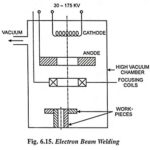
Electron Beam Welding - Working Principle, Advantages, Disadvantages and Applications: Basically, electron beam welding in vacuum utilises the kinetic energy of electrons travelling with high velocity in a high vacuum…

Continue Reading Electron Beam Welding – Working Principle, Advantages, Disadvantages and Applications
Submerged Arc Welding – Working, Advantages and Applications

Submerged Arc Welding – Working, Advantages and Applications

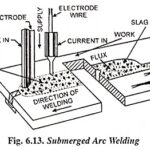
Submerged Arc Welding - Working, Advantages and Applications: Submerged Arc Welding - It is an arc welding process that uses an arc between a bare metal electrode and the weld…

Continue Reading Submerged Arc Welding – Working, Advantages and Applications
Spot Welding – Definition, Working Principle, Application and Advantages

Spot Welding – Definition, Working Principle, Application and Advantages

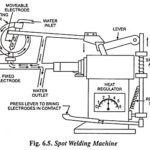
Spot Welding - Definition, Working Principle, Application and Advantages: By definition, spot welding is a form of resistance welding in which the parts or pieces are joined in spots, accompanied…

Continue Reading Spot Welding – Definition, Working Principle, Application and Advantages
Butt Welding – Definition, Types and Applications

Butt Welding – Definition, Types and Applications

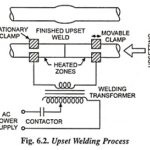
Butt Welding - Definition, Types, Advantages, Disadvantages and Applications: Welding of two pieces of metal together with a butt weld can be carried out by different resistance welding processes. The…

Continue Reading Butt Welding – Definition, Types and Applications
Resistance Welding – Definition, Working Principle and Types

Resistance Welding – Definition, Working Principle and Types

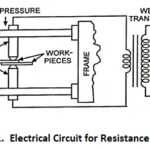
Resistance Welding - Definition, Working Principle, Types, Advantages and Disadvantages: Definition - Resistance welding is that process in which a sufficiently strong electric current is sent through the two metal…

Continue Reading Resistance Welding – Definition, Working Principle and Types
Heating of Buildings – Factors and Types

Heating of Buildings – Factors and Types

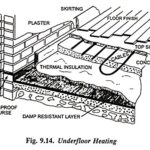
Heating of Buildings - Factors and Types: The purpose of most forms of space-heating installation is to provide comfortable conditions in which people can work or relax. Space heating of…

Continue Reading Heating of Buildings – Factors and Types
Domestic Refrigerator Working Principle and Construction

Domestic Refrigerator Working Principle and Construction

Domestic Refrigerator Working Principle and Construction: The applications of refrigeration for domestic purposes are mainly in the form of domestic refrigerator and home freezers. The main purpose of this type…

Continue Reading Domestic Refrigerator Working Principle and Construction

Electronics Engineering Multiple Choice Questions and Answers (MCQs) Part 9

Electronics Engineering Multiple Choice Questions and Answers (MCQs) Part 9: 343. When an 8086 executes an INT type instruction, it (a) resets both IF and TF flags. (b) resets all…

Continue Reading Electronics Engineering Multiple Choice Questions and Answers (MCQs) Part 9
  • Go to the previous page
  • 1
  • …
  • 49
  • 50
  • 51
  • 52
  • 53
  • 54
  • 55
  • …
  • 124
  • Go to the next page

Popular Articles

  • Triangular Wave Generator Using Op amp
  • Single Phase Full Wave Controlled Rectifier
  • Square Wave Generator Using Op amp
  • BCD Adder Circuit
  • Class B Push Pull Amplifier
  • Second Order Low Pass Butterworth Filter
  • Voltage Series Feedback Amplifier
  • Intel 8051 Architecture and 8031 Architecture
  • Single Phase Fully Controlled Rectifier Control of DC Motor
  • Darlington Amplifier
  • Op Amp IC 741 Pin Diagram and its Working
  • IC 723 Voltage Regulator
  • Transient Response of RL Circuit
  • Load Frequency Control of Single Area System
  • Voltage Divider Bias Circuit
  • Voltage Shunt Feedback Amplifier Circuit
  • First Order Low Pass Butterworth Filter
  • Second Order High Pass Butterworth Filters
  • Internal Architecture of 8086
  • Precision Full Wave Rectifier

Recent Articles

  • Fixed Positive Voltage Regulators
  • Swamping Resistor in Differential Amplifier
  • Fermi Dirac Function in Semiconductor
  • Energy Band Diagram of Semiconductors, Insulators and Metals
  • Avalanche Photodiode – Definition, Basic Structure and Workings
  • Complementary Metal Oxide Semiconductor (CMOS)
  • Effect of Negative Feedback on Input Impedance
  • What is Thermionic Emission?
  • Class B Power Amplifier – Operation and Efficiency derivation
  • Commutating Capacitor in Bistable Multivibrator or Speed up Capacitor
  • What is Clipper Circuit? – Definition and Classification
  • Switching Diode in Electronics
  • Construction and Working of Vacuum Pentode
  • Emitter Coupled Clipper Circuit
  • Diode Clamping Circuit – Positive and Negative Clamping
  • Push Pull Amplifier – Circuit Diagram and its Workings
  • Single Input Unbalanced Output Differential Amplifier
  • Noise in Amplifiers and its Types
  • What is Resistor in Electronics?
  • DC Equivalent Circuit of Transistor

Active users on site

  • HOME
  • PRIVACY POLICY
  • CONTACT US
  • SITEMAP
COPYRIGHT © 2014 TO 2026 EEEGUIDE.COM ALL RIGHTS RESERVED