Dynamic Braking of Induction Motor
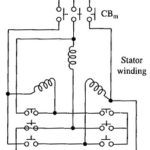
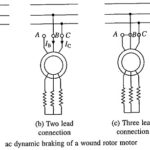
Dynamic Braking of Induction Motor(or Rheostatic Braking): (a) AC Dynamic Braking - AC Dynamic Braking of Induction Motor is obtained when the motor is run on a single phase supply…
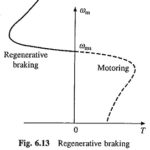
Braking of Induction Motor Drive: Following methods are employed for Braking of Induction Motor Drive: Regenerative braking Plugging or reverse voltage braking Dynamic (or rheostatic) braking further categorised as: ac…
Starting of Induction Motor Drives: Starting of Induction Motor Drives arrangement is chosen based on the load requirements and nature of supply (weak or stiff). It may be required to…
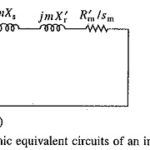
Harmonic Equivalent Circuit of Induction Motor: When fed from an inverter or cycloconverter, the motor terminal voltage is non-sinusoidal but it has half-wave symmetry. A non-sinusoidal waveform can be resolved…
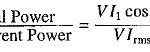
Drawbacks of Rectifier Fed DC Drives: Drawbacks of Rectifier Fed DC Drives are as follows: 1. Distortion of Supply: Source current of a rectifier has harmonics. In a weak ac…
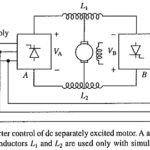
Dual Converter Control of DC Separately Excited Motor: A Dual Converter Control of DC Separately Excited Motor (Fig. 5.35) consists of two fully-controlled rectifiers connected in anti-parallel across the armature.…
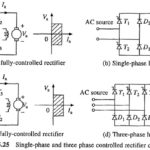
Controlled Rectifier Fed DC Drives: Controlled Rectifier Fed DC Drives are used to get variable dc voltage from an ac source of fixed voltage. Controlled Rectifier Fed DC Drives are…
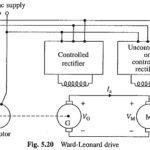
Ward Leonard Method of Speed Control: Known after the name of its inventor Ward Leonard Method of Speed Control (1891), it consists of a separately excited generator feeding the dc…