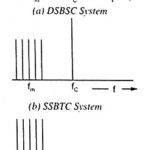
Types of Amplitude Modulation (AM)
Types of Amplitude Modulation (AM): As we know already that, one carrier and two sidebands are produced in AM generation. However, it is not essential that all these signals are…
Radio Receivers Articles: Tuned Radio Frequency Receiver: The Tuned Radio Frequency Receiver is a simple “logical” receiver. A person with just a little knowledge of communications would probably expect all…
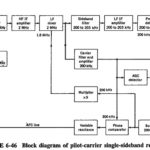
Receiver Types: There are Two Receiver Types namely, Pilot Carrier Receiver and a Suppressed Carrier Receiver; the suppressed carrier receiver incorporates a frequency synthesizer for extra stability and also is…
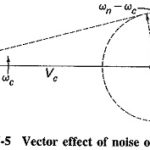
Noise and Frequency Modulation: Noise and Frequency Modulation is much more immune to noise than amplitude modulation and is significantly more immune than phase modulation. In order to establish the…
Electronic Communication Articles: This Electronic Communication Articles which includes the following topics: Principles of Communication Systems Need of Modulation in Communication System Bandwidth Requirement in Communication System External Noise in…
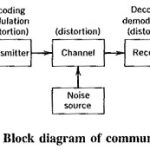
Principles of Communication Systems: In a broad sense, the term Principles of Communication Systems refers to the sending, receiving and processing of information by electronic means. Communications started with wire…
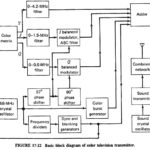
Color TV Transmission: Having discussed the manner of indicating luminance and the two components of chrominance in Color TV Transmission, it is now necessary to investigate how they may be,…
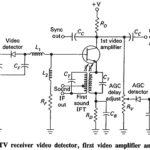
Monochrome Television Receiver Block Diagram: Monochrome Television Receiver Block Diagram as shown in Figure 17-9, TV receivers use the superheterodyne principle. There is extensive pulse circuitry, to ensure that the…