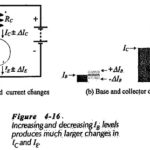
Amplification in Transistor

Amplification in Transistor: Current Amplification in Transistor - We already know that a transistor can be used for current amplification. A small change in the base current (ΔIB) produces a large…

Continue Reading Amplification in Transistor
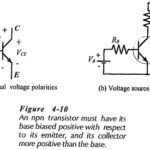
Transistor Voltage and Current

Transistor Voltage and Current: The Transistor Voltage polarities for an npn transistor are shown in Fig. 4-10(a). As well as conventional current direction, the direction of the arrowhead indicates the…

Continue Reading Transistor Voltage and Current

Zener Diodes Characteristics

Zener Diodes Characteristics: When a Junction diode is reverse biased, normally only a very small reverse saturation current flows; IS on the reverse characteristic in Fig. 2-25(a). When the reverse…

Continue Reading Zener Diodes Characteristics

Testing of Semiconductor Diode

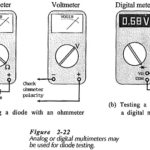
Testing of Semiconductor Diode: There are Several methods are available for Testing of Semiconductor Diode, namely, Ohmmeter Tests: One of the simplest and quickest tests can be made using an ohmmeter…

Continue Reading Testing of Semiconductor Diode

Traction Drive Rating and Energy Consumption

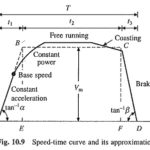
Traction Drive Rating and Energy Consumption: Traction Drive Rating and Energy Consumption - The speed-time curve of Fig. I0.6(a) is reproduced in Fig. 10.9. For simplification in calculations, it is…

Continue Reading Traction Drive Rating and Energy Consumption

Self Controlled Synchronous Motor Drive

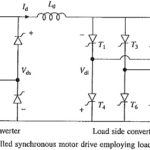
Self Controlled Synchronous Motor Drive: A Self Controlled Synchronous Motor Drive employing a load commutated thyristor inverter is shown in Fig. 7.10. In large power drives wound field synchronous motor…

Continue Reading Self Controlled Synchronous Motor Drive

Types of DC Motor

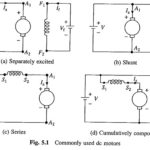
Types of DC Motor: The commonly used Types of DC Motor are shown in Fig. 5.1. In a separately excited motor, the field and armature voltages can be controlled independent…

Continue Reading Types of DC Motor