Single Tuned Amplifier – Circuit Operation and Limitations
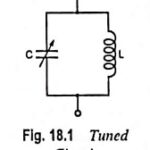
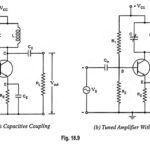
Single Tuned Amplifier - Circuit Operation and Limitations: The circuit arrangements of a single tuned amplifier are given in Figs. 18.9(a) and 18.9(b). The output may be taken either with…
Tuned Amplifiers - Definition, Classification and Advantages: Amplifier amplifying a signal of specific frequency or narrowband of frequencies is known as tuned amplifier. Tuned amplifiers are mostly employed for amplification…
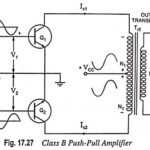
Class B Push Pull Amplifier - Circuit Diagram, Operation and Derivation: The circuitry for the Class B Push Pull Amplifier operation is the same as that for the class A…
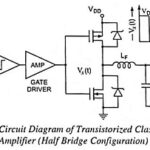
Class D Power Amplifiers - Circuit Diagram, Operation and Applications: Historically, audio amplifiers have been configured as class A, class B or class AB and the art of design is…
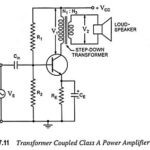
Transformer Coupled Class A Power Amplifier: Transformer Coupled Class A Power Amplifier also sometimes referred to as single ended power amplifier. The term "single ended" (denoting only one transistor) is…
Difference between Voltage Amplifier and Power Amplifier: The Difference between Voltage Amplifier and Power Amplifier are discussed below The primary function of the voltage amplifier is to raise the voltage…
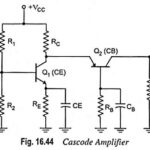
Cascode Amplifier or CE-CB Configuration: The CE-CB configuration (usually referred to as cascode amplifier) is shown in Fig. 16.44. Figure 16.44 shows a cascode configuration with a common-emitter (CE) stage…
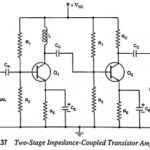
Impedance Coupled Transistor Amplifier: A two-stage impedance coupled transistor amplifier using N-P-N transistors in CE configuration is shown in Fig. 16.37. The only difference between this circuit and R-C coupled…