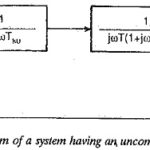
Uncompensated Large Time Constants
Uncompensated Large Time Constants: It is possible to compensate only one Uncompensated Large Time Constants using a PI controller. A PID controller is used to compensate for two large time…
Exponential Variation of the Input to the Controller: The linear Exponential Variation of the input to the Controller, discussed in the foregoing section, is too involved to achieve by means…
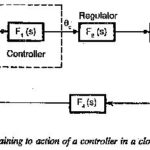
Controller Design Frequency Response: The Controller Design Frequency Response (or root locus) alters or reshapes the frequency response (or root locus) of the original system to the desired one. Thus…
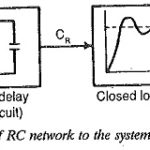
Methods of Compensation in Control System: The Different Methods of Compensation in Control System are Cascade Compensation Feedback Compensation Load Circuit Compensation Input Circuit Compensation A drive system having closed…
Root Locus Plot: In the electrical drives employing closed loop control techniques, it is often necessary to investigate the effects of changing the parameters of the system on its stability.…
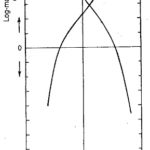
Stability from Log Magnitude Angle Diagram: Yet another way of portraying the frequency response is to draw a curve showing the Log Magnitude Angle Diagram in decibels on the Y-axis…
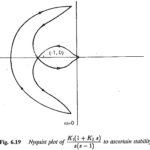
Nyquist Criterion: Nyquist Criterion - This stability criterion enables one to establish the stability of a system using a graphical procedure in the frequency domain. Here also there is no…
Stability Control Drives: The concept of stability is very well known. By the term stability one implies the ability of a system to return to its original position or attain…