Pulse Code Modulation
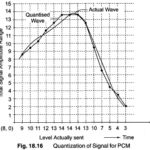
Pulse Code Modulation(PCM): Pulse Code Modulation(PCM) is different from the other forms of pulse modulation studied so far, PCM also uses sampling techniques, but it differs from the others in…
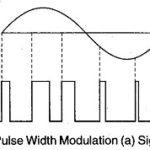
Pulse Width Modulation(PWM): Pulse width modulation of PTM is also often called Pulse Duration Modulation (PDM). In this system, shown in Fig. 18.8, we have a fixed amplitude and starting…
Pulse Time Modulation(PTM): In Pulse Time Modulation the signal is sampled in the same way as in PAM, but the pulses indicating instantaneous sample amplitudes have a constant amplitude themselves.…
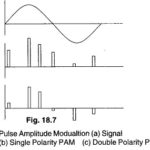
Pulse Amplitude Modulation(PAM): Pulse Amplitude Modulation(PAM) is the simplest form of Pulse Modulation. It is shown in Fig. 18.7. PAM is a pulse modulation system in which the signal is…
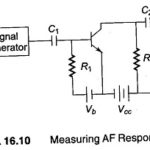
Audio Amplifier Frequency Response: The Audio Amplifier Frequency Response is essential for filters, couplings circuits, amplifier stages and overall audio circuits. An amplifier stage is used as an example. A…
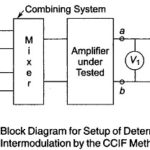
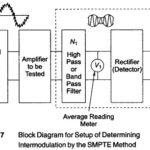
CCIF Intermodulation Distortion: In the second method of carrying out an CCIF Intermodulation Distortion test, the two test signals used have equal amplitude, and relatively high but slightly different frequencies.…
Nonlinear Distortion Measurements: One of the methods of Nonlinear Distortion Measurements consists of simultaÂneously applying two sinusoidal voltages of different frequencies to the amplifier input and observing the sum, difference…
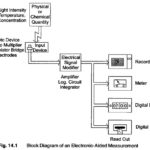
Signal Conditioning System: Signal Conditioning System - The measurand, which is basically a physical quantity, is detected by the first stage of the instrumentation or measurement system. The first stage…