Signal Definition and Classification of Signals
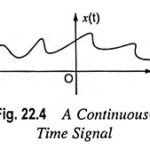
Signal Definition and Classification of Signals: A signal is a single valued function of one or more variables that conveys some information. Signals are represented mathematically as the functions of…
Modulation - Definition, Types and Need for Modulation: Any wave has three significant characteristics viz. amplitude, frequency and phase, and modulation is a process of impressing information to be transmitted…
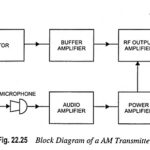
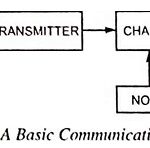
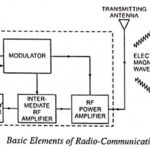
Basic Block Diagram of Communication System: The Basic Block Diagram of Communication System is shown in Fig. 22.1. The essential components of a communication system are information source, input transducer,…
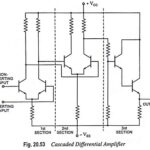
Cascaded Differential Amplifier Working Principle: Cascaded Differential Amplifier Working Principle - Figure 20.53 gives an idea of how differential amplifiers can be cascaded to give an op-amp. Here the output…
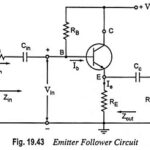
Emitter Follower Circuit - Operation, Advantages and Applications: Emitter Follower Circuit is also a negative current feedback circuit. This circuits exhibits a large input impedance, a small output impedance, and…
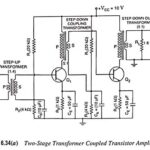
Transformer Coupled Transistor Amplifier - Working Principle: The main cause for low voltage and power gains of an R-C coupled amplifier is that the effective load (Rac) of each stage…
Difference between JFET and MOSFET: The Difference between JFET and MOSFET are quite similar in their operating principles and in their electrical characteristics. However, they differ in some aspects, as…
Enhancement Type MOSFET - Construction, Operation and Characteristics: Although DE-MOSFET is useful in special applications, it does not enjoy widespread use. However, it played an important role in history because…