CE Transistor Characteristics
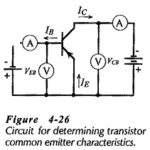
CE Transistor Characteristics: Common Emitter Circuit - Figure 4-26 shows a circuit for determining CE Transistor Characteristics. The input voltage is applied between the B and E terminals, and the…
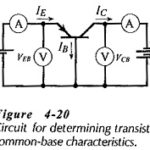
Common Base Transistor Characteristics: To investigate the Common Base Transistor Characteristics of a diode (a two-terminal device), several levels of forward or reverse bias voltage are applied and the resulting…
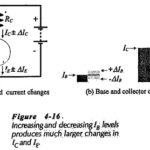
Amplification in Transistor: Current Amplification in Transistor - We already know that a transistor can be used for current amplification. A small change in the base current (ΔIB) produces a large…
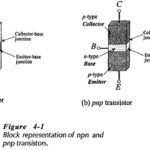
Transistor Operation: pnp and npn Transistor Operation - A junction transistor is simply a sandwich of one type of semiconductor material (p-type or n-type) between two layers of the opposite type.…
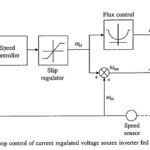
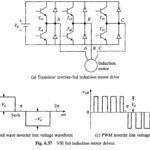
Current Regulated Voltage Source Inverter: Current Regulated Voltage Source Inverter operates with current controlled PWM. In current controlled pulse-width modulation, machine phase current is made to follow a sinusoidal reference…
Voltage Source Inverter Control of Induction Motor: Variable frequency and variable voltage supply for induction motor control can be obtained either from a voltage sourve inverter (VSI) or a cycloconverter.…
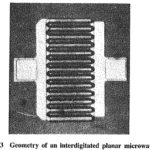
Microwave Transistors: Silicon bipolar transistors were first on the microwave scene, followed by GaAs field-effect transistors. Indeed, FETs now have noticeably lower noise figures, and in the C band and…
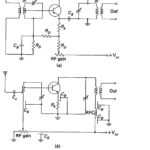
Transistor RF Amplifier Circuit: A radio receiver always has an RF section, which is a tunable circuit connected to the antenna terminals. It is there to select the wanted frequency…