Transistor Circuit Noise
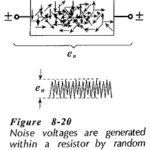
Transistor Circuit Noise: Unwanted signals at the output of an electronics system are termed noise. The noise amplitude may be large enough to severely distort, or completely swamp, the wanted…
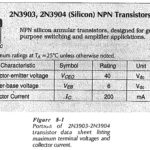
Transistor Datasheet: To select a transistor for a particular application, the Transistor Datasheet provided by device manufacturers must be consulted. Most data sheets start off with the device type number…
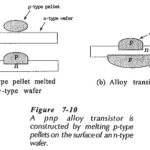
Transistor Fabrication Techniques: Different Transistor Fabrication Techniques are namely Alloy Transistor Micro Alloy Transistor Microalloy Diffused Transistor Diffuse Mesa Transistor Epitaxial Mesa Transistors Diffused Planar Transistor Annular Transistor 1. Alloy…
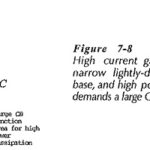
Transistor Construction Techniques and Performance: The following are Transistor Construction Techniques and Performance are as follows, Current Gain: Good current gain requires that most charge carriers from the emitter pass…
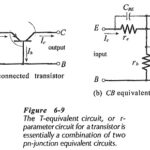
Transistor Models and Parameters: T-Equivalent Circuit - Because a transistor consists of two pn-junctions with a common centre block, it should be possible to use two pn-junction ac equivalent circuits…
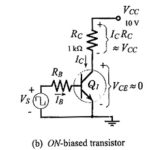
Biasing Transistor Switching Circuits: Direct-Coupled Switching Circuit - When a transistor is used as a Biasing Transistor Switching Circuits, it is either biased off to IC = 0, or biased…
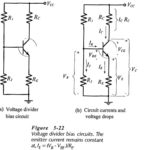
Voltage Divider Bias Circuit: Circuit Operation - Voltage Divider Bias Circuit, also known as emitter current bias, is the most stable of the three basic transistor bias circuits. A voltage…
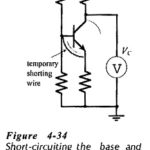
Transistor Testing Circuit: In-Circuit Testing - A quick test to check if a transistor is operational can be performed while the device is still connected in a circuit. Consider Fig.…