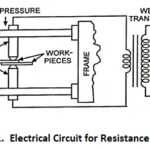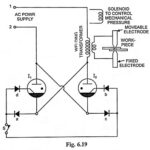
Electronic Control in Resistance Welding Process
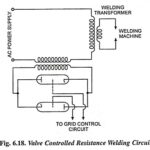
Electronic Control in Resistance Welding Process: As there are several factors, i.e., current, pressure, heat, time, to be considered, manual control does not yield good results in case of resistance…
Resistance Welding Machines - Overview and Circuit Diagram: Resistance welding machines incorporates a transformer, suitable electrodes for supplying current to the weld and arrangement for controlling the mechanical pressure, and…
Resistance Welding - Definition, Working Principle, Types, Advantages and Disadvantages: Definition - Resistance welding is that process in which a sufficiently strong electric current is sent through the two metal…
Electrical Power Engineering Multiple Choice Questions and Answers (MCQs) Part 5: 202. In resistance welding, the magnitude of current is controlled (a) by varying the primary voltage of the welding…
Control Devices for Industrial Motors Interview Questions and Answers: 1. What are the two main applications of a thyratron ? Ans. Two main applications of thyratron are (i) switching and…
Electron Tubes Interview Questions and Answers: 1. What is an electron tube? Ans. An electron tube is an electronic device in which conduction of electrons takes place in an evacuated or…
Comparisons in Electrical and Electronics: This Comparisons in Electrical and Electronics which includes the following topics: Difference between 80186 and 80286 Microprocessor Difference Between 80286 and 80386 Microprocessor Difference Between…
Electronics Engineering Articles: This Electronics Engineering Articles which includes the following topics: Gate Turn Off Thyristor (GTO) – Symbol, Operations and Applications Types of Power Supply in Electronics What is…