Braking System in Train
Braking System in Train: Braking System in Train has number of advantages over mechanical braking. It reduces wear and tear on rails and wheels, substantially increasing their life. It is…
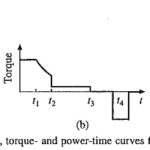
Duty Cycle of Traction Drives: The Duty Cycle of Traction Drives in trains is explained with the help of speed-, torque- and power-time diagrams (Fig. 10.6) which are drawn for…
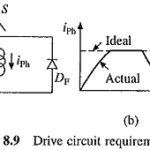
Drive Circuits for Stepper Motor: A Drive Circuits for Stepper Motor is usually driven from a low voltage dc source. When a phase is to be energised, the dc source…
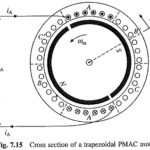
Brushless DC Motor Drives(Trapezoidal PMAC): The cross section of a 3-phase 2 pole Brushless DC Motor Drives is shown in Fig. 7.15. It has permanent magnet rotor with wide pole…
Sinusoidal PMAC Motor: Since the voltages induced in the stator phases of a sinusoidal PMAC motor are sinusoidal, ideally, the three stator phases must be supplied with variable frequency sinusoidal…
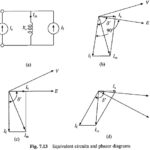
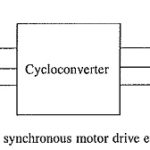
Self Controlled Synchronous Motor Drive Employing a Cycloconverter: Self Controlled Synchronous Motor Drive Employing a Cycloconverter as shown in Fig. 7.13. Firing pulses are generated either by comparison of the…
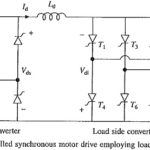
Self Controlled Synchronous Motor Drive: A Self Controlled Synchronous Motor Drive employing a load commutated thyristor inverter is shown in Fig. 7.10. In large power drives wound field synchronous motor…
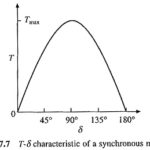
Operation of Synchronous Motor: Operation of Synchronous Motor - For any speed other than synchronous speed, the relative speed between air gap flux wave and the rotor is not zero.…