Step Response of an Amplifier
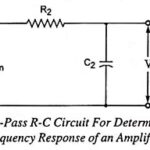
Step Response of an Amplifier: An alternative criterion of amplifier fidelity is the response of the amplifier to a particular input waveform. Of all possible available waveforms, the most generally…
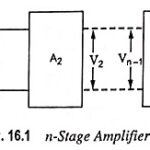
n Stage Cascaded Amplifier: As already discussed, several amplifier stages are usually cascaded to increase the overall voltage gain of the amplifier. However, sometimes cascading is done to obtain the…
What is Multistage Amplifier? - Types, Block Diagram and Analysis Amplifiers that produce voltage, current, and/or power gain through the use of two or more stages are called multistage amplifiers.…
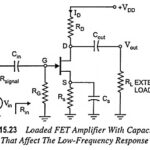
Low Frequency Response of FET Amplifier: The analysis of the Low Frequency Response of FET Amplifier is quite similar to that of the BJT amplifier. Though here common-source configuration is…
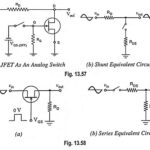
Applications of FETs (Field Effect Transistors): Applications of FETs - FET has a very high input impedance (100 MΩ in case of JFETs and 104 to 109 MΩ in case of…
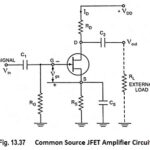
Common Source JFET Amplifier with AC Equivalent Circuit: The Common Source JFET Amplifier Circuit configuration is the most widely employed configuration. It is because this configuration provides high input impedance,…
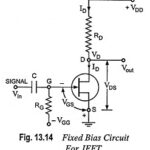
FET Biasing Methods - Fixed Bias, Self Bias, Potential Divider Bias and Current Source Bias: Unlike BJTs, thermal runaway does not occur with FETs. However, the wide differences in maximum…
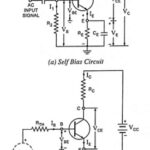
Self Bias or Potential Divider Bias Circuit: This is the most commonly used biasing arrangement. The arrangement of Self Bias or Potential Divider Bias Circuit is shown in Fig. 12.17…