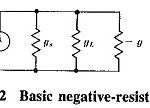
Negative Resistance Amplifier
Negative Resistance Amplifier: The classical application of the tunnel diode was in microwave oscillators, especially after it was realized that the secret of stable oscillations lay in loosely coupling the…
Parametric Amplifier Types: The basic Parametric Amplifier Types have already been discussed in detail, but several others also exist. They differ from one another in the variable reactance used, the…
Parametric Amplifier: The parametric amplifier uses a device whose reactance is varied in such a manner that amplification results. It is low-noise because no resistance need be involved in the…
Crossed Field Amplifier: The Crossed Field Amplifier is a microwave power amplifier based on the magnetron and looking very much like it. It is a cross between the TWT and…
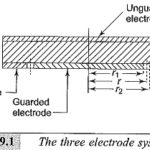
Direct Current Resistivity Method: The specimen shape and the electrode arrangement should be such that the Direct Current Resistivity Method can be easily calculated. For a solid specimen, the preferable…
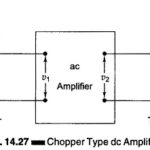
Chopper Type DC Amplifier: A simple ac amplifier Transformer may be used to amplify a dc input through the use of additional circuit component known as chopper. In this circuit,…
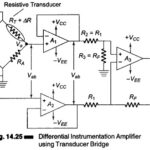
Differential Instrumentation Amplifier Transducer Bridge: Figure 14.25 shows a simplified circuit of a Differential Instrumentation Amplifier Transducer Bridge. In this circuit a resistive transducer (whose resistance changes as a function…
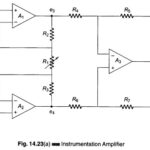
Instrumentation Amplifier Circuit: The schematic diagram of an Instrumentation Amplifier Circuit constructed with dc opamps and consisting of general features is shown in Fig. 14.23 (a). Many of the input…