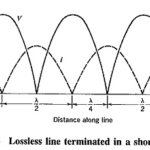
Standing Waves in Transmission Lines
Standing Waves in Transmission Lines: Standing Waves in Transmission Lines : When power is applied to a transmission line by a generator, a voltage and a current appear whose values…
Losses in Transmission Lines: Types of Losses in Transmission Lines are three ways in which energy, applied to a transmission line, may become dissipated before reaching the load: radiation, conductor…
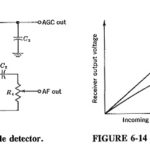
Working Principle of Automatic Gain Control: Working Principle of Automatic Gain Control is a system by means of which the overall gain of a radio receiver is varied automatically with…
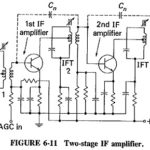
Intermediate Frequency Amplifier: Choice of frequency: The Intermediate Frequency Amplifier (IF) of a receiving system is usually a compromise, since there are reasons why it should be neither low nor…
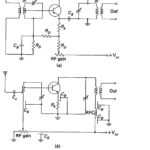
Transistor RF Amplifier Circuit: A radio receiver always has an RF section, which is a tunable circuit connected to the antenna terminals. It is there to select the wanted frequency…
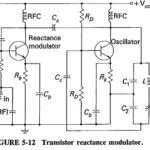
Generation of Frequency Modulation: The Generation of Frequency Modulation system is a variable output frequency, with the variation proportional to the instantaneous amplitude of the modulating voltage. The subsidiary requirements…
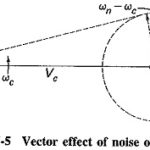
Noise and Frequency Modulation: Noise and Frequency Modulation is much more immune to noise than amplitude modulation and is significantly more immune than phase modulation. In order to establish the…
Single Sideband: A brief, if not oversimplified, explanation of Single Sideband will help in understanding the transmission process. To begin, we must review some basic transmission processes. The physical length…