Chopper Resistance in the Rotor Circuit
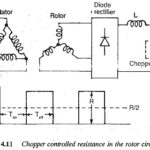
Chopper Resistance in the Rotor Circuit: Speed control by means of slip variation can be achieved by employing a variable resistance Chopper Resistance in the Rotor Circuit. From the equations…
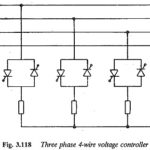
Three Phase AC Voltage Controller: To control the current and voltage of three phase loads, Three Phase AC Voltage Controller are required. The single phase controller described previously can be…
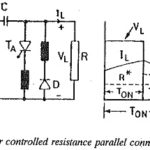
Chopper Controlled Resistance: By interrupting the flow of current through a resistance R in a periodic fashion using a switch, the value of resistance can be effectively varied. The interrupÂtion…
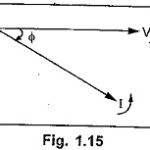
AC Fundamentals: Let us discuss in brief, the AC Fundamentals necessary to analyse the networks consisting of various alternating current and voltage sources, resistances and inductive, capacitive reactances. An alternating…
Characteristics of Synchronous Motor: Characteristics of Synchronous Motor are constant speed motors. The speed of the motor is decided by the number of poles and frequency. Compared to an induction…
Torque Speed Characteristics of Induction Motor: From Eq. 1.27 it can be observed that the maximum torque is independent of rotor resistance. However, the slip at which the maximum torque…
Characteristics of Three Phase Induction Motor: The performance Characteristics of Three Phase Induction Motor can be deÂrived using the approximate equivalent circuit shown in Fig. 1.20(a). In the circuit The…
Speed Torque Characteristics of Series Motor: The field winding is connected in series with the armature (Fig. 1.2(b)). The armature current and field current are the same. The operating Speed…