Half Wave Rectifier Circuit
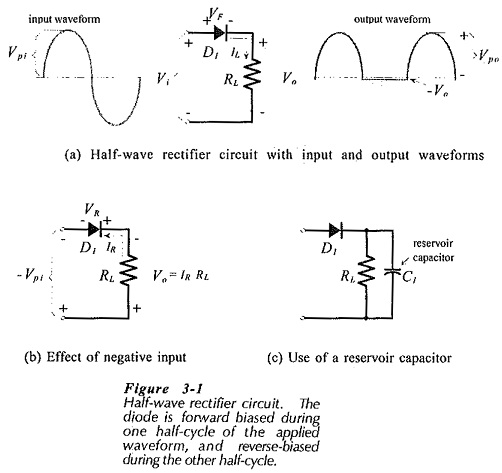
Half Wave Rectifier Circuit: A basic diode Half Wave Rectifier Circuit is shown in Fig. 3-1(a). An alternating input voltage is applied to a single diode connected in series with a load resistor RL. The…
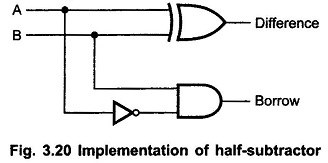
Half Subtractor and Full Subtractor Circuit: Subtractor are divided into two categories namely, half subtractor and full subtractor circuit. Half Subtractor Circuit: The Half Subtractor Circuit consists of four possible elementary operations, namely, In all…
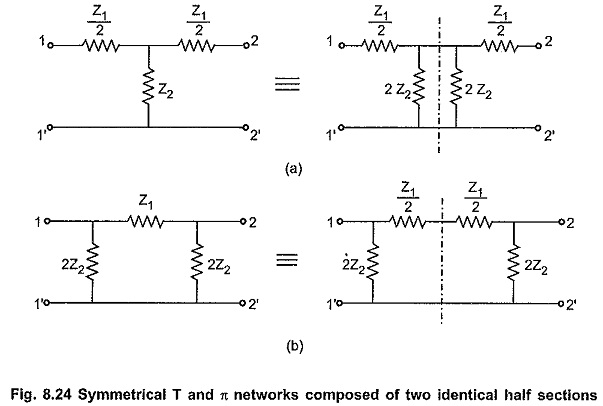
Half Section in Four Terminal Network: The Half Section in Four Terminal Network can be obtained by splitting symmetrical T and Ï€ networks into two identical networks. The half sections obtained by splitting shunt arm…
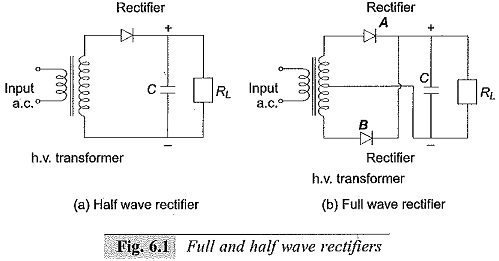
Half and Full Wave Rectifier Circuits: Half and Full Wave Rectifier Circuits for producing high d.c. voltages from a.c. sources may be (a) Half wave, (b) Full wave, or (c) Voltage doubler type rectifiers. The rectifier…
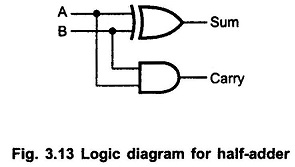
Half Adder and Full Adder Circuit: Adders are divided into two categories namely, half adder and full adder circuit. Half Adder Circuit: The Half Adder Circuit operation needs two binary inputs : augend and addend…
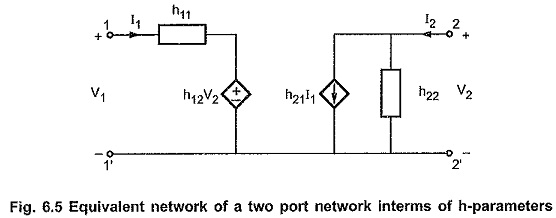
h Parameters of Two Port Network: h Parameters of Two Port Network are also called hybrid parameters. These parameters are very useful in constructing models for transistors. The transistor parameters cannot be calculated using by…
Gunn Effect: In 1963, Gunn discovered the transferred electron effect which now bears his name. This Gunn Effect is instrumental in the generation of microwave oscillations in bulk semiconÂductor materials. The effect was found by…
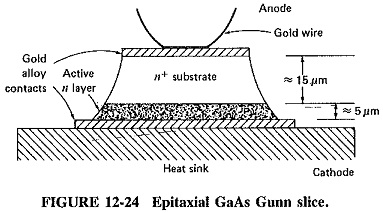
Gunn Diode Working Principle: A practical Gunn Diode Working Principle consists of a slice like the one shown in Figure 12-24, sometimes with a buffer layer between the active layer and the substrate, mounted in…
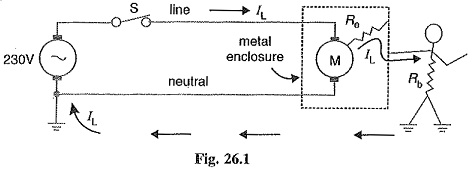
Grounding or Earthing: The process of connecting the metallic frame (i.e. non-current carrying part) of electrical equipment or some electrical part of the system (e.g. neutral point in a star-connected system, one conductor of the…
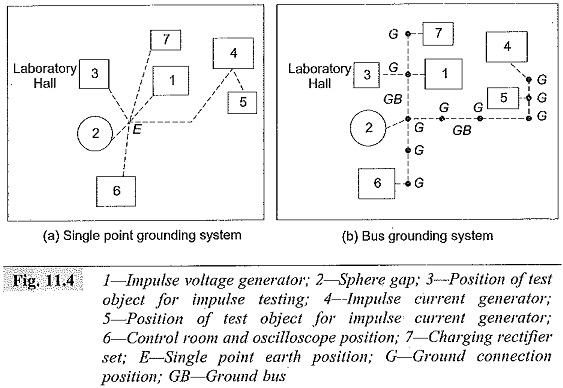
Grounding of Impulse Testing Laboratories: An earth or ground system means an established stable .reference potential normally taken to be zero. There are three types of Grounding of Impulse Testing Laboratories are: the ideal ground,…