Cathode Ray Oscilloscope Interview Questions and Answers

Cathode Ray Oscilloscope Interview Questions and Answers: 1. What is cathode ray oscilloscope (CRO)? Ans. A CRO is an electronic device with a CRT as its main component and other associated…
Electronics Engineering Articles: This Electronics Engineering Articles which includes the following topics: Gate Turn Off Thyristor (GTO) – Symbol, Operations and Applications Types of Power Supply in Electronics What is…
Nuclear Waste Disposal and Safety: Introduction - Nuclear Waste Disposal and Safety from nuclear power plants activities, defense related nuclear weapon activities or other applications of nuclear technology is hazardous to…
Economics in Plant Selection: Economics in Plant Selection - The plant capacity and size depends upon the power demand. A power plant should be reliable i.e. its capacity must be…
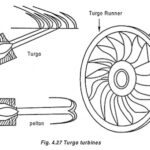
Turgo Turbine Working Principle: The Turgo turbine is an impulse water turbine designed for medium head applications. Operational Turgo Turbines achieve efficiencies of about 87%. It works with net heads…
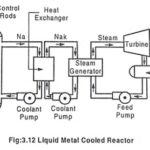
Liquid Metal Cooled Reactor (LMCR) - Working, Advantages & Disadvantages: A liquid metal cooled reactor (LMCR) is an advanced type of nuclear reactor that uses a liquid metal as the…
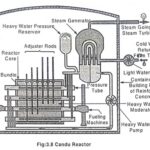
Canada Deuterium Uranium Reactor (CANDU): It is a Canadian invented pressurized heavy water reactor which uses 99.8 percent of Deuterium oxide D2O (Heavy water) as moderator and coolant. The reactor…
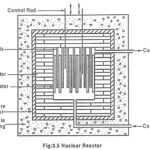
Nuclear Reactor - Definition and its Components: Nuclear reactor is an apparatus which is used to extract the heat produced by the nuclear fission chain reaction. In other words, a…