Types of Fuses
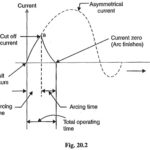
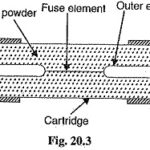
Types of Fuses: Fuse is the simplest current interrupting device for protection against excessive currents. Since the invention of first fuse by Edison, several improvements have been made and now-a-days,…
Fuses Definition: Fuses Definition States that : A fuses is a short piece of metal, inserted in the circuit, which melts when excessive current flows through it and thus breaks…
Circuit Breakers Definition: A circuit breaker can make or break a circuit either manually or automatically under all conditions viz., no-load, full-load and short-circuit conditions. This characteristic of the Circuit…
Brown Boveri Regulator: In this type of Brown Boveri Regulator, exciter field rheostat is varied continuously or in small steps instead of being first completely cut in and then completely…
Tirril Voltage Regulator: In this type of Tirril Voltage Regulator, a fixed resistance is cut in and cut out of the exciter field circuit of the alternator. This is achieved…
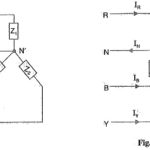
Three Phase Unbalanced Load: The 3-phase loads that have the same impedance and power factor in each phase are called balanced loads. The problems on balanced loads can be solved…
Three Wire DC System Balancer Set: Although in a 3-wire d.c. system every effort is made to distribute the various loads equally on both sides of the neutral, yet it…
Three Wire DC Distribution System: The great disadvantage of direct current for general power purposes lies in the fact that its voltage cannot readily be changed, except by the use…