Factors Governing Selection of Electric Motors
Factors Governing Selection of Electric Motors: Parallel to the growth of machine tools, an equally rapid progress has been made in the field of electric motors. The electric motors of…
Difference between Converter Fed and Chopper Fed DC Drives: Difference between Converter Fed and Chopper Fed DC Drives - For speed control of a dc motor it is necessary that…
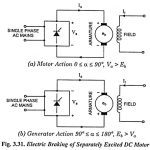
Electric Braking of Separately Excited DC Motor: The electric braking of separately excited dc motor is show in Figure 3.31. Figure 3.31 (a) illustrates a simplified representation of a single…
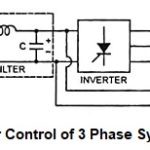
Thyristor Control of 3 Phase Synchronous Motor: The synchronous motor is a constant speed motor and it develÂops torque only at synchronous speed which is directly proportional to supply frequency.…
Protective Devices and Interlocks: Protective devices must be incorporated in the control circuit (or circuits) to interrupt the flow of current to the motor to guard against overloads or other…
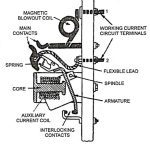
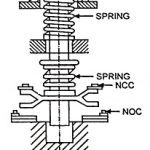
Magnetic Contactor - Definition, Working Principle and Types: Magnetic Contactor is a electromagnetically operated switches that provide a safe and convenient means for repeatedly making and breaking branch circuits. The…
Various Pilot Devices in Motor Control: Motor control devices may be classified as primary control devices and pilot control devices. Pilot devices control the primary control devices which in turn…
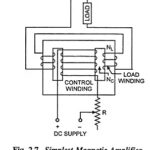
Magnetic Amplifier - Working Principle and Applications: In a magnetic amplifier, the basic component is a steel-cored coil with an additional winding energized by direct current. It is intended for…