Transformer Testing Methods
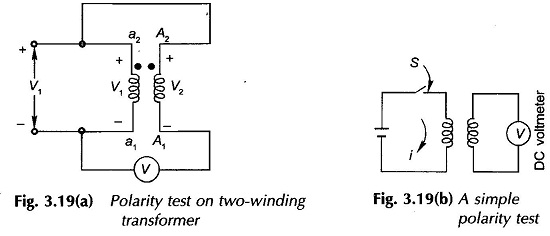
Transformer Testing Methods: Two chief difficulties which do not warrant the Transformer Testing Methods by direct load test are: Large amount of energy has to be wasted in such a test, It is a stupendous…
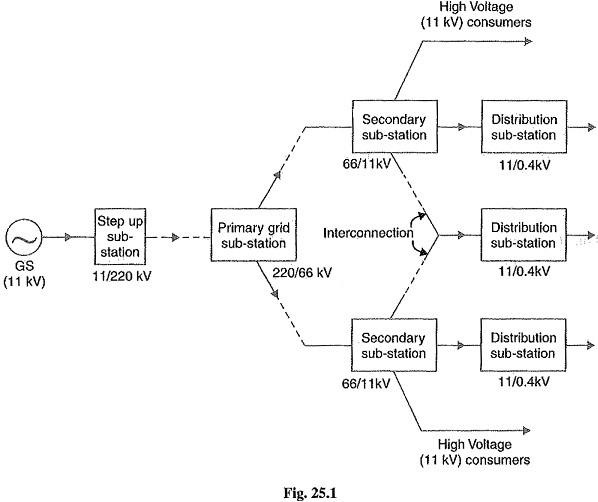
Transformer Substation: The majority of the sub-stations in the power system are concerned with the changing of voltage level of electric supply. These are known as Transformer Substation because transformer is the main component employed…
Transformer Protection Types: Nature of Transformer Faults: Power transformers, being static, totally enclosed and oil immersed develop faults only rarely but the consequences of even a rare fault may be serious, unless the transformer is…
Transformer Protection Interview Questions and Answers: 1. What are the faults that are likely to occur in a power transformer ? Ans. The faults likely to occur in a power transformer are open-circuit faults (an…
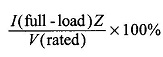
Transformer Nameplate Rating: Transformer Nameplate Rating Details - The voltage ratio is specified as V1 (rated)/V2 (rated). It means that when voltage V1 (rated) is applied to the primary, the secondary voltage on full load…
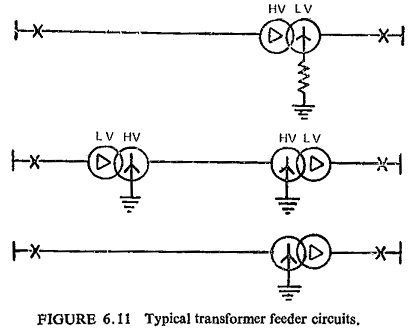
Transformer Feeder Protection: Transformer Feeder Protection - In order to supply bulk power from a major switching station, the transformer is sometimes connected directly to the feeder without an HV switchgear at the transformer. Although…
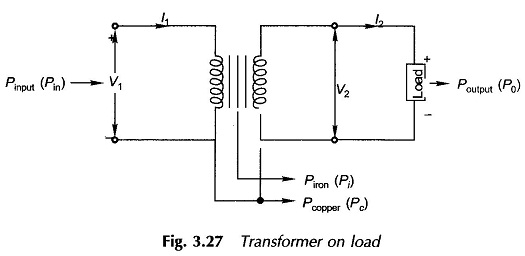
Transformer Efficiency Formula: Power and distribution transformers are designed to operate under conditions of constant rms voltage and frequency and so the efficiency and voltage regulation are of prime importance. Transformer Efficiency Formula is the…
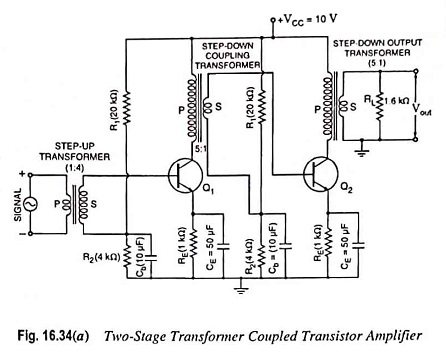
Transformer Coupled Transistor Amplifier - Working Principle: The main cause for low voltage and power gains of an R-C coupled amplifier is that the effective load (Rac) of each stage is reduced due to the…
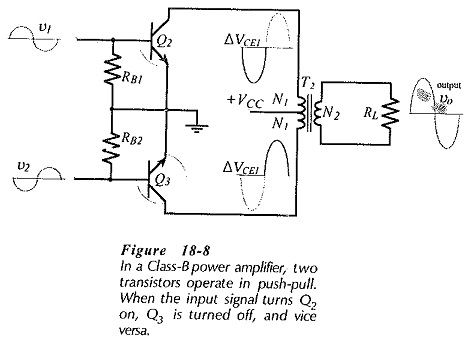
Transformer Coupled Class B Amplifier: Class B Amplifier - The inefficiency of Class-A amplifiers is largely due to the transistor bias conditions. In a Class-B amplifier, the transistors are biased to cutoff, so that there…
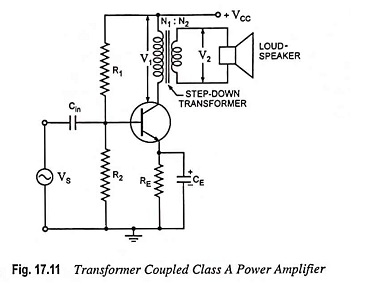
Transformer Coupled Class A Power Amplifier: Transformer Coupled Class A Power Amplifier also sometimes referred to as single ended power amplifier. The term "single ended" (denoting only one transistor) is used to distinguish it from…