Reversible Drive using Field Reversal
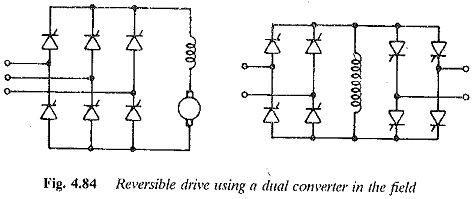
Reversible Drive using Field Reversal: A Reversible Drive using Field Reversal can be realised as shown in Figs. 4.83 and 4.84. In Fig. 4.83, the armature is fed from a two quadrant converter with change…
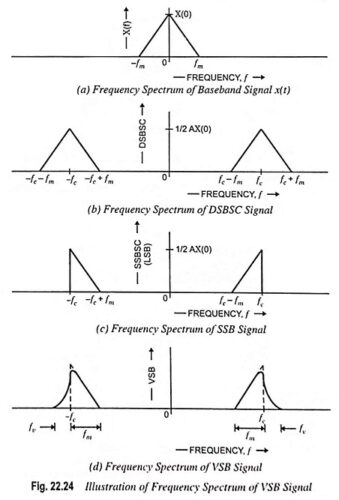
Vestigial Sideband Modulation System (VSB): A Vestigial Sideband Modulation System (VSB) is actually a compromise between DSBSC and SSB modulation systems. In other words, it can be said that it is an optimum choice in…
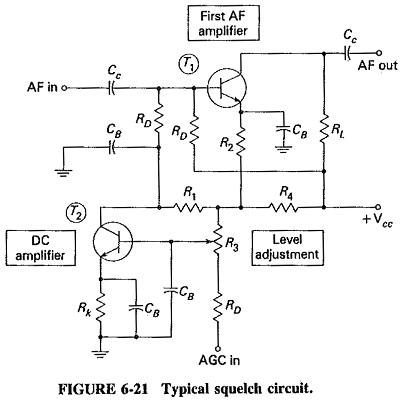
Squelch Circuit: Squelch (muting):Â When no carrier is present at the input, i.e., in the absence of transmissions on a given channel or between stations, a sensitive receiver will produce a disagreeable amount of loud noise.…
Number Systems and Codes Interview Questions and Answers: 1. What is meant by radix (or base) of a number system? Ans. Radix or base of a number system is the number of digits or distinct symbols…
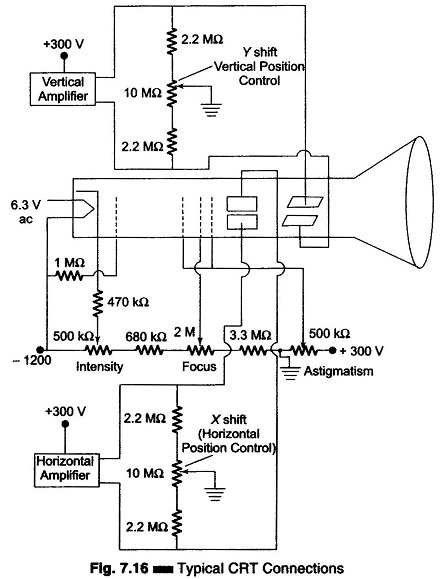
Various CRT Connections and Controls in CRO Panel: Figure 7.16 shows various controls and Typical CRT Connections. The following controls are available on CRO panel. Intensity: It controls the magnitude of emission of the electron,…
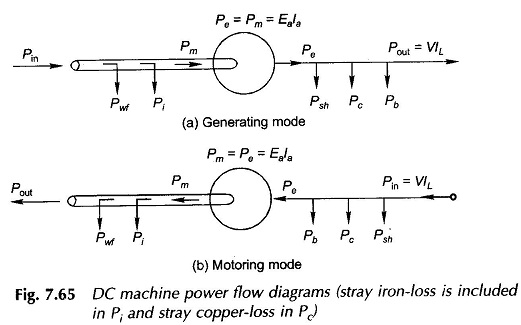
Testing of DC Machine or Swinburne Test: Testing of DC Machine or Swinburne Test - Machine efficiency, in general, has been discussed already. The approach here will be to apply the general principles for the…
Electrical Power Engineering Multiple Choice Questions and Answers (MCQs) Part 1: 1. The basic elements of an electric drive are : (a) electric motor and the transmission system. (b) electric motor, the transmission and control…
Difference between Pentium 3 and Pentium 4 Processors: The difference between Pentium 3 and Pentium 4 Processors is given in table below Pentium III Processor Pentium IV Processor Pentium III processor is a sixth-generation processor…
Electrical Energy Interview Questions and Answers: 1. What is the per capita consumption of electricity in India ? Ans. 631 kWh in 2006. 2. Why electrical energy is more useful than other forms of energy…
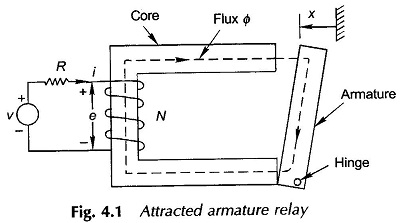
Energy in Magnetic System: Energy in Magnetic System - The chief advantage of electric energy over other forms of energy is the relative ease and high efficiency with which it can be transmitted over long…