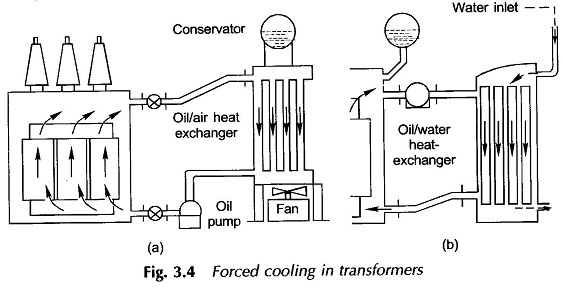
Forced Cooling in Transformer

Forced Cooling in Transformer: Forced Cooling in Transformer - For transformer sizes beyond 5 MVA additional cooling would be needed which is achieved by supplementing the tank surface by a separate radiator in which oil…

Comments Off on Forced Cooling in Transformer

Field Control Method of DC Shunt Motor

Field Control Method of DC Shunt Motor: The Field Control Method of DC Shunt Motor are in general much more adaptable speed drives than ac motors which are associated with a constant-speed rotating field. Indeed…

Comments Off on Field Control Method of DC Shunt Motor

External Characteristics of DC Shunt Generator

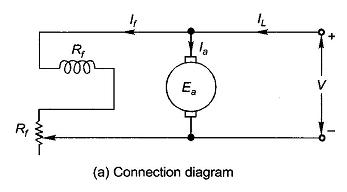
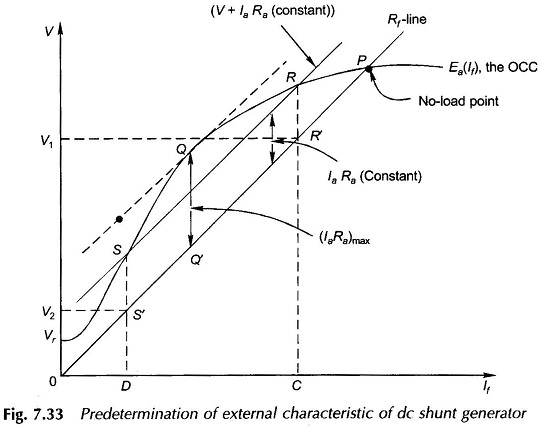
External Characteristics of DC Shunt Generator: The External Characteristics of DC Shunt Generator can be predetermined from a knowledge of the OCC and armature and field resistances (which can be determined by simple dc test),…

Comments Off on External Characteristics of DC Shunt Generator

External Characteristics of Compound Generator

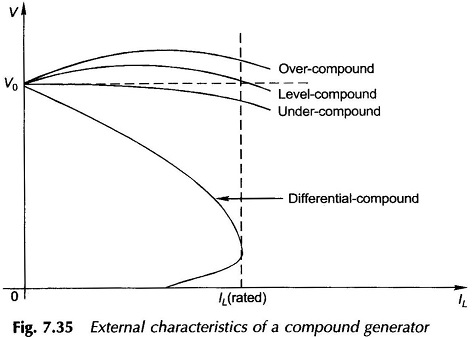
External Characteristics of Compound Generator: External Characteristics of Compound Generator - The causes of voltage drop in the terminal voltage from no-load to full-load in a shunt generator can be partially/fully/over-compensated by use of an…

Comments Off on External Characteristics of Compound Generator

Excitation Phenomenon in Transformer

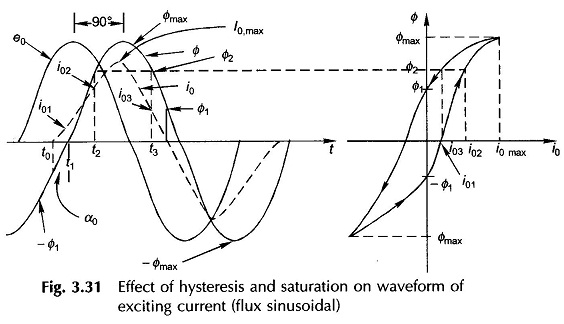
Excitation Phenomenon in Transformer: It was stated already that the no-load current in a transformer is nonsinusoidal. The basic cause for this Excitation Phenomenon in Transformer, which lies in Transformer Hysteresis and Saturation non­linearities of…

Comments Off on Excitation Phenomenon in Transformer