What is Resistor in Electronics?
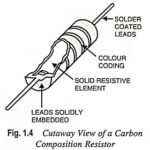
What is Resistor in Electronics? What is Resistor in Electronics? - Resistance is a dissipative element, which converts electrical energy into heat, when the current flows through it in any…
Measurement of Electrical Quantities: Measurement of electrical quantities which includes Measurement of Voltage Measurement of Current Frequency Measurement Phase-Angle Measurement Power-Factor Measurement Impedance Measurement VA Measurement Power Measurement VAR Measurement…
Square Wave Generators: Diode clippers can be used to remove the curved portion of the sinusoidal wave to give square waves. The operational amplifier together with an integrator, can be…
Smoothing Circuits: The rectified a.c. consists of a series of undirectional half waves of current or voltage. It is generally desirable to smooth this output. The various filters used for…
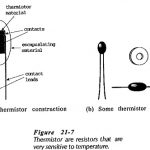
Thermistor Operation: The word thermistor is a combination of thermal and resistor. A thermistor is a resistor with definite thermal characteristics. Most thermistors have a negative temperature coefficient (NTC), but…
Signal Generator in Electronic Devices Articles: RC Phase Shift Oscillator Circuit Diagram: Figure 16-1 shows the RC Phase Shift Oscillator Circuit Diagram, which consists of an inverting amplifier and an…
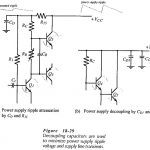
Power Supply Decoupling: Power Supply Decoupling - High-power amplifiers require high supply current levels, so unregulated power supplies are often employed to avoid the power wasted in a series regulator.…
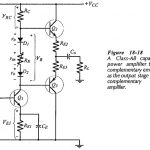
Capacitor Coupled Class AB Output Stage: The basic circuit of a Class-AB amplifier using a complementary emitter follower output stage and a Capacitor Coupled Class AB Output Stage load is…